Melanie Jones - Reflective Entry - 2nd Blog:
The Value and Application of Critical Thinking in Practice
What is Critical
Thinking?
Critical thinking is essential in
health and social care practice, as it enables professionals to thoroughly
analyse situations and consider all potential approaches to supporting
individuals. This process ensures that care is delivered in a structured and
goal-oriented manner, aligning with principles such as being specific,
measurable, achievable, relevant, and time-bound (SMART) (Cottrell, 2017).
Central to critical thinking is the delivery of care that is safe, effective,
and consistently person-centred, placing emphasis on practitioners seeking the
best outcomes for their service users (Higgs et al., 2008).
Critical thinking requires professional curiosity, encouraging practitioners not to accept information at face value but to question, reflect, and reason in order to determine the most appropriate course of action. This is particularly important within multi-disciplinary teams, where collaborative decision-making can lead to better outcomes for service users (Facione, 2015).
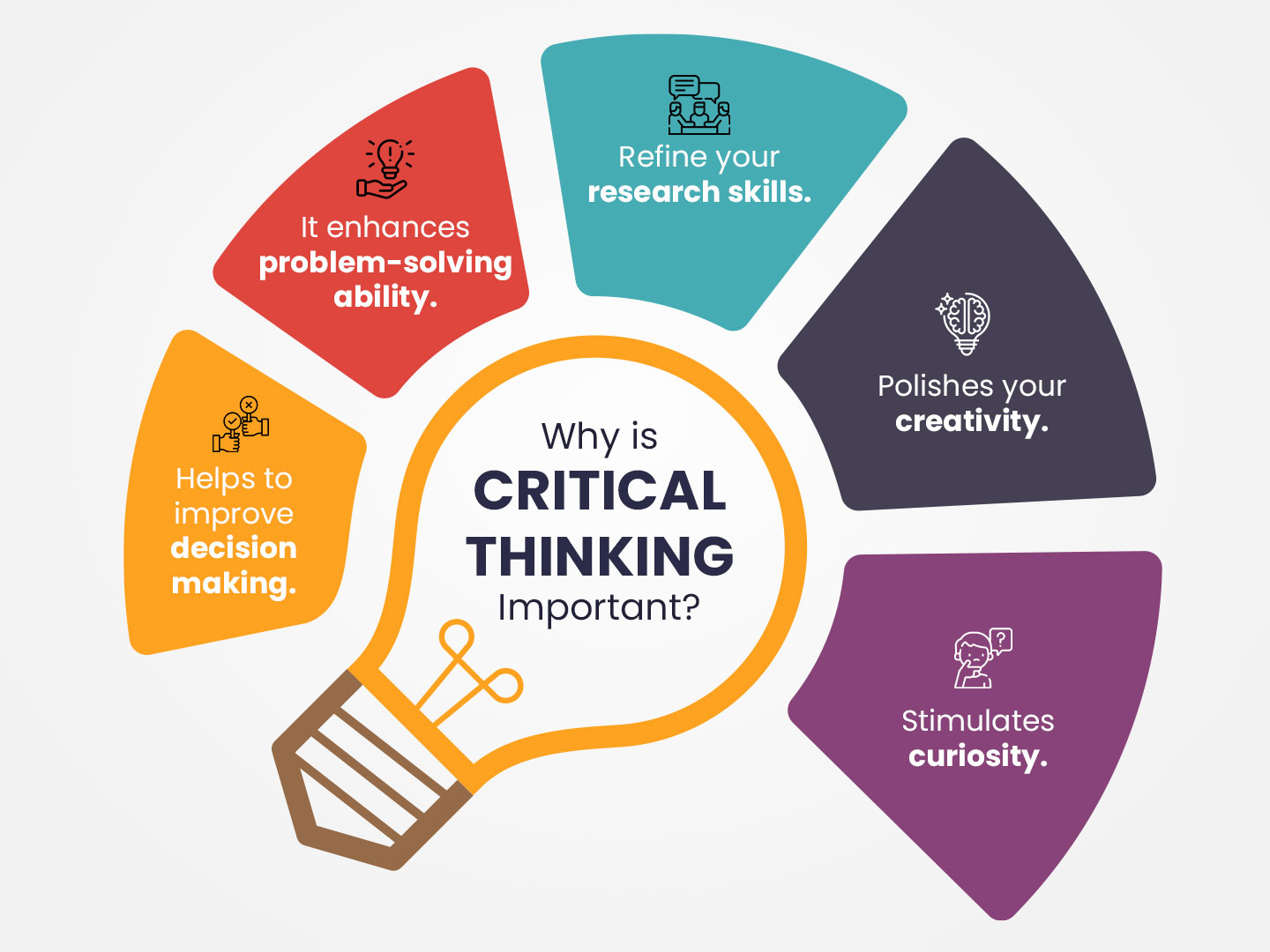
The benefits of critical thinking in health and social care are extensive. It enhances decision-making and allows us as practitioners to anticipate potential consequences and weigh the positive and negative implications of their choices (Cottrell, 2017). Critical thinking supports problem-solving, facilitates adaptability, and promotes consistent improvements in care provision. Ultimately, critical thinking empowers professionals to deliver high-quality, responsive, and evidence-informed care that meets the complex needs of those they support (Facione, 2015).

(VTJ, 2023)
How is Critical Thinking
Applied in Practice?
Understanding the importance of
critical thinking is essential, but it is equally important to recognise how
practitioners apply it effectively in health and social care. Various models
can support this process, such as Gibbs’ Reflective Cycle (Gibbs, 1988) and the
Paul-Elder Critical Thinking Framework (Elder, 2014).
In practice, critical thinking
requires practitioners to analyse and assess all relevant information, drawing
on sources such as observations, records, and professional knowledge
(Brookfield, 2012). They must then engage in decision-making and
problem-solving tailored to the individual, carefully weighing potential
benefits and risks before determining a course of action. Reflection on
personal and professional experiences further enhances practice by enabling
practitioners to evaluate past interventions and outcomes, supporting
continuous improvement (Mann, Gordon and MacLeod, 2009). Ethical reasoning is
also integral, ensuring that core principles such as autonomy, non-maleficence,
and justice guide decisions.
Through critical thinking, practitioners are better equipped
to collaborate and communicate effectively with multidisciplinary teams and
partner agencies. This ensures that care is delivered in a timely, safe, and
person-centred manner, optimising outcomes for service users (Manley, McCormack
and Wilson, 2008).
Example: A work-Related
Dilemma which Required Critical Thinking
This reflection examines my
experience of being diagnosed with cataracts and requiring surgery in both
eyes, which presented a range of emotional, physical, and practical challenges.
Critical thinking was essential in enabling me to analyse the situation
thoroughly, evaluate the decisions made, and derive both personal and
professional learning from the experience (Facione, 2015). It was applied
through reflective analysis, consideration of emotional and systemic factors,
ethical reasoning, and the formulation of actionable strategies to inform
future social care practice. By engaging critically with the experience, I was
able to translate personal insight into professional growth, enhancing my
empathy, communication, and ability to deliver person-centred care. The
application of critical thinking also allowed me to reframe the situation,
reflect on my own thoughts and feelings, and assess the options available,
weighing their potential benefits and risks (Brookfield, 2012). This process
ultimately enabled me to make informed decisions regarding my care while
reinforcing the skills necessary to strengthen and improve my professional
practice in the future (Cottrell, 2017).
Conclusion and
Professional Development
Through structured reflection and
critical analysis, I have gained a deeper understanding of the role of critical
thinking in health and social care practice. It underpins ethical
decision-making, promotes empathy, enhances communication, and strengthens
professional judgement (Higgs et al., 2008). By applying critical thinking to
both personal and observed experiences, practitioners can improve the quality
of care, respond effectively to complex situations, and continuously develop
their professional competence. Moving forward, I plan to engage in regular
reflective practice, seek feedback from colleagues, and pursue training to
enhance emotional resilience and critical reasoning skills, ensuring I provide
safe, effective, and person-centred care in all aspects of my professional role
(Bulman and Schutz, 2013).
References:
Brookfield, S.D. (2012) Teaching for Critical Thinking:
Tools and Techniques to Help Students Question Their Assumptions. 2nd edn.
San Francisco: Jossey-Bass.
Bulman, C. and Schutz, S. (2013) Reflective Practice in
Nursing. 5th edn. Oxford: Wiley-Blackwell.
Cottrell, S. (2017) Critical Thinking Skills: Developing
Effective Analysis and Argument. 3rd edn. London: Palgrave.
Facione, P.A. (2015) Critical Thinking: What It Is and
Why It Counts. 2nd edn. Millbrae, CA: Insight Assessment.
Gibbs, G. (1988) Learning by Doing: A Guide to Teaching and
Learning Methods. Oxford: Oxford Polytechnic.
Higgs, J., Jones, M., Loftus, S. and Christensen, N. (2008) Clinical
Reasoning in the Health Professions. 3rd edn. Oxford: Elsevier.
Manley, K., McCormack, B. and Wilson, V. (2008) International
Practice Development in Nursing and Healthcare. Oxford: Blackwell.
Mann, K., Gordon, J. and MacLeod, A. (2009) ‘Reflection and
reflective practice in health professions education: a systematic review’, Advances
in Health Sciences Education, 14(4), pp. 595–621.
Paul, R. and Elder, L. (2014) The Miniature Guide to
Critical Thinking Concepts and Tools. 7th edn. Tomales, CA: Foundation for
Critical Thinking.
Vietnam Teaching Jobs (2023) How to Teach Critical
Thinking [image]. Available at: https://vietnamteachingjobs.com/wp-content/uploads/2023/08/how-to-teach-critical-thinking-1.jpg
(Accessed: 13 November 2025).


Health and social care critical thinking helps practitioners to critically evaluate situations and make sound decisions, deliver safe, effective and person-centred care. It is a process which includes doubting assumptions, thinking over experiences, and reasoning morally to make things better. Practically, such models as Gibbs Reflective Cycle and Paul-Elder Framework serve to help in constant learning and professional improvement. The reflection on the personal health experience, provided by the author, allows emphasizing that critical thinking promotes empathy, resilience, and the enhancement of communication, eventually leading to the personal and professional growth.
ReplyDeleteYour reflection demonstrates a clear understanding of how critical thinking underpins safe, effective, and person-centred care. I appreciate the way you connected theoretical models like Gibbs Reflective cycle.
ReplyDeleteIn the health & social care, critical thinking helps the professionals to make decision t& to evaluate a safe place & put service user in person- centre. professionals should apply empathy, experience.
ReplyDeleteThank you Cynthia for your comments on the blog
ReplyDeletein health and social care, critical thinking allows professionals to analyse situations thoroughly, consider different viewpoints, evaluate evidence ,develop logical, strategic solutions to complex problems.
ReplyDelete