Melanie Jones - Reflective Entry - 3rd Blog:
Ethical Dilemmas and Critical Thinking in Health and Social care
What is an Ethical
Dilemma?
Ethics and ethical principles are
fundamental within health and social care practice, as they underpin
professional behaviour and ensure the safety, respect, and dignity of both
service users and practitioners. Ethical practice promotes integrity, fairness,
and accountability, helping professionals provide care that is both
compassionate and measured (Beauchamp, 2019).
An ethical dilemma occurs when a professional is faced with a situation involving two or more conflicting moral principles, and there is no single clear or “right” answer (Johnstone, 2016). In these situations, each possible course of action may have both positive and negative consequences, requiring the practitioner to carefully evaluate which decision aligns most closely with ethical and professional standards. For example, dilemmas often arise when balancing a person’s right to autonomy with the professional’s duty of care and responsibility to prevent harm (Banks, 2012).
Health and social care professionals must therefore use critical thinking,
reflection, and ethical frameworks to guide their decision-making. This
involves considering individual rights, professional codes of conduct, and the
potential impact of their actions (Department of Health and Social Care, 2015).
Ultimately, resolving ethical dilemmas requires striking a balance between
respecting service users’ choices, maintaining professional integrity, and
safeguarding wellbeing, ensuring that care remains person-centred, fair, and
ethically sound (Cowley, 2013).

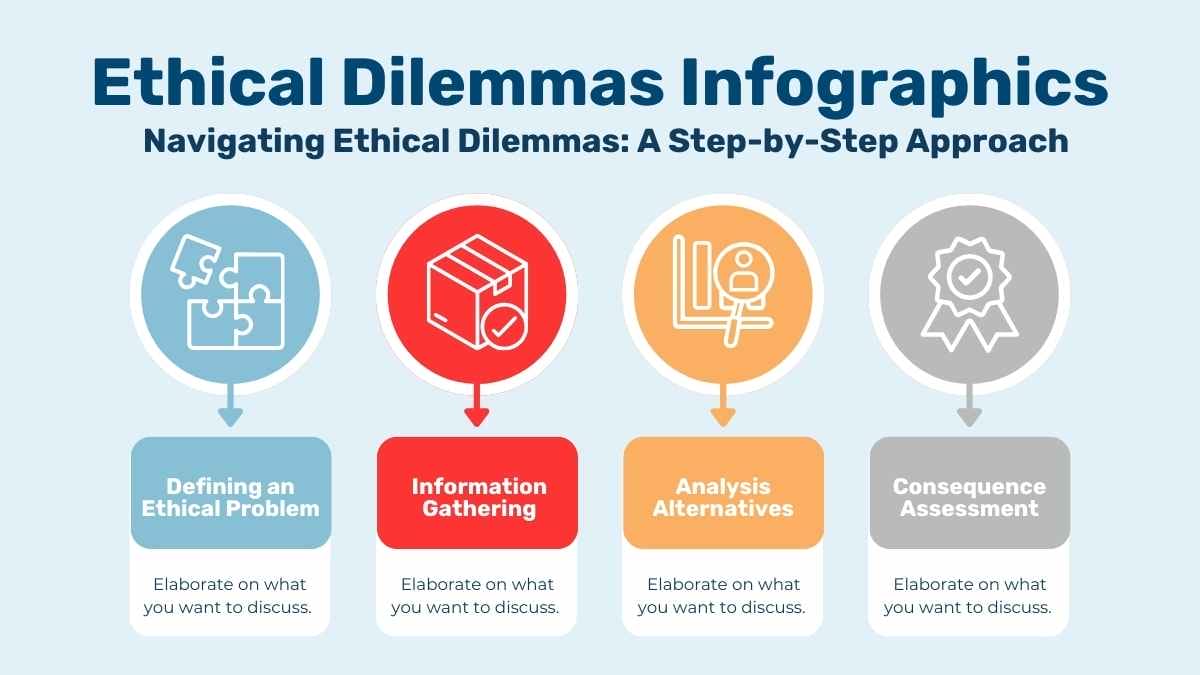
(SlidesCarnival, 2025)
Example: Reflection on
Ethical Dilemma
During my attendance at the
hospital for cataract surgery, I observed an ethical dilemma involving an
elderly patient who initially refused to proceed with the operation despite
receiving clear medical advice. The healthcare team respected her autonomy, in
line with professional obligations and the Mental Capacity Act (2005).
However, her deteriorating vision presented significant risks, including
progressive vision loss, increased likelihood of falls, reduced independence,
social isolation, and potential medication errors.
Observing this situation, I felt
conflicted as the staff balanced the patient’s right to make her own decisions
with their duty of care to safeguard her wellbeing. Using Gibbs’ Reflective
Cycle (1988), I explored my feelings of frustration, empathy, and
concern, and questioned whether the patient was fully informed, whether fear or
misunderstanding influenced her decision, and if improved communication could
have affected the outcome.
Through critical reflection, I
recognised that cultural beliefs, past medical experiences, and the need to
build trust were influencing the patient’s decision. The team arranged a family
meeting, providing a safe space for her to express her fears. With empathetic
support from the professionals and encouragement from her family, the patient
ultimately agreed to proceed with the surgery.
This experience highlighted the
importance of ethical reflection, empathy, and collaborative problem-solving in
health and social care. It demonstrated how patient-centred communication and
teamwork can resolve ethical dilemmas while respecting autonomy, promoting
safety, and achieving positive outcomes.
The Impact of Misinformation
on Health and Social Care Practice
Throughout the last 20 years, social
media has become an influential tool in health and social care, providing
opportunities for education, communication, and public health promotion.
However, there have also been a number of significant ethical dilemmas raised
that can affect professionals, service users, and the wider community (Beauchamp,
2019).
Such dilemmas involve the
newfound ability of unqualified individuals giving critical medical information
and advice online. Influencers or social media users without professional
training are able to share personal experiences and opinions that appear
credible but are not based on evidence (Tarlier, 2010). This undermines trust
in qualified professionals and creates confusion for vulnerable people seeking
help (Banks, 2012).
Ethically, professionals must
navigate these challenges by promoting truthfulness, integrity, and
accountability online. They should engage with social media responsibly using
it to educate, raise awareness, and advocate for public health while
maintaining professional boundaries and respecting confidentiality (Bradshaw,
2010). Preventing ethical dilemmas related to social media use requires clear
professional boundaries, education, and responsible online behaviour (Fawcett,
2012). Health and social care organisations should provide training and
guidance on professional use of social media, ensuring staff understand
confidentiality laws, data protection, and organisational policies. This helps
prevent accidental breaches of patient privacy or the sharing of sensitive
information online (Johnstone, 2016).
References:
Banks, S. (2012) Ethics and
Values in Social Work. 4th edn. Basingstoke: Palgrave Macmillan.
Beauchamp, T.L. and Childress,
J.F. (2019) Principles of Biomedical Ethics. 8th edn. New York: Oxford
University Press.
Bradshaw, A. and Stratford, N.
(2010) The Reflective Practitioner in Health and Social Care. London:
Learning Matters.
Cowley, S., Whittaker, A. and
Whittaker, S. (2013) Ethics in Health and Social Care Practice. London:
Routledge.
Department of Health and Social
Care (2015) Code of Conduct and Professional Standards for Health and Social
Care Practitioners. London: DHSC.
Fawcett, J., Desanto-Madeya, S.
and Watson, J. (2012) Contemporary Nursing Knowledge: Analysis and
Evaluation of Nursing Models and Theories. 3rd edn. Philadelphia, PA: F.A.
Davis.
Gibbs,
G. (1988) Learning by Doing: A Guide to Teaching and Learning Methods.
Oxford: Oxford Polytechnic.
UK Government (2005) Mental Capacity Act 2005. London: The Stationery
Office. Available at: https://www.legislation.gov.uk/ukpga/2005/9/contents (Accessed: 13 November 2025).
Johnstone, M.J. (2016) Bioethics:
A Nursing Perspective. 6th edn. Chatswood, NSW: Elsevier.
SlidesCarnival (2025) Simple
Ethical Dilemmas Infographics [online image]. Available at: https://www.slidescarnival.com/wp-content/uploads/Simple-Ethical-Dilemmas-Infographics-9.jpg
(Accessed: 14 November 2025).
Tarlier, D.S. (2010) ‘Ethical
reasoning in nursing practice: A reflection on patient autonomy’, Nursing
Ethics, 17(4), pp. 419–431.


Ethical dilemmas occur when the professionals are caught in conflicting moral principles, and there is no obvious right answer. The process of balancing autonomy, safety, and duty of care is achieved by health and social care practitioners with the help of critical thinking and ethical frameworks.
ReplyDeleteThank you Jose for your comment, i will be sure to take your comment into account.
Deletethe ethical dilemmas, Melanie has give us a good explanation on the ethical dilemmas occur as the professionals are focus in conflict in the principles value moral.
ReplyDeleteThank you Cynthia for your comment
Deletemelanie, this blog has demonstrated how patient centred approach and teamwork can resolve ethical delemmas.
ReplyDeletethank you for your comment Omozee your observation is well taken.
ReplyDelete