Friday, 14 November 2025


Application of Theory

Cynthia kana. Blog 3

To transform this peer experience into professional learning, it is necessary to apply advanced theoretical models of reflection and integrate evidence-based knowledge relevant to HSC. The transition from reactive support to proactive, critically informed support was best understood through Schön’s concepts of reflection-in-action and reflection-on-action (Eraut, 2011; Ghaye, 2011).

Reflection on Book Reviews | Laurence Biro's reflections on Life, Universe  and Everything

Figure 5: Schön’s Concept of Reflection (Eraut, 2011; Ghaye, 2011)

Reflection-on-Action and The Learning Loop

Eraut (2011) describes how practitioners learn by reflecting on an event, reviewing their actions, and forming new knowledge, a process known as reflection-on-action. The initial chaotic support was subjected to this process: the realisation that the friend needed structured, professional help, not just empathetic listening. This led to a conscious shift in strategy: moving from offering non-expert solutions to offering expertly sourced resources. This application aligns directly with Fook’s (2012) methodology, which calls for continuous re-evaluation of practice based on context and outcomes.

The knowledge gained from the course materials, including the importance of early intervention (Department of Health [DH], 2011), provided a critical framework for problem-solving.

Diagram of a learning loop

AI-generated content may be incorrect.

Figure 6: The Learning Loop (Eraut, 2011)

The dilemma, how to motivate a friend to seek help without violating their autonomy, was addressed by applying techniques learned from reflective practice:

Critical Questioning (The "Five Whys")

Instead of asking "Why are you sad?", which is judgmental, a critical approach asks "What underlying factors are contributing to this feeling?" (Free Ethical Learning and Development Resource for People and Organisations, 2025). This led to identifying financial stress and work pressure as root causes, externalising the problem from the friend's character.

Reflection-in-Action and Adapting Support

During the unfolding of the situation, there was a need to use reflection-in-action (Eraut, 2011). It is the skill to respond in the present time to the critical evaluation of the current situation. As an example, the reflective support system had to be changed immediately when the friend responded negatively to a suggestion. Rather than retiring, the practitioner had to critically evaluate the trigger of the negative reaction: was it shame, fear, or a feeling of being judged? This demanded a sensitive, humanised reaction as a step back and justification of their emotional condition, and then seeking to provide further assistance. The ability to make critical self-corrections in the moment is essential in frontline HSC work, where decisions made in a split second can have significant importance.


A diagram of a reflective practice

AI-generated content may be incorrect.

Figure 8: Reflection-in-Action Loop (Eraut, 2011)

The final problem-solving initiative was the effective transfer of the friend from being dependent on peer support to receiving professional services. This was achieved by critically examining the boundaries of peer relationships and applying a professional approach to signposting and boundary setting, despite the absence of a formal title. The entire process illustrates the cyclical nature of critical reflective practice: performance (support) triggers reflection (evaluation), which in turn prompts new critical thinking (analysis of ethics/evidence), leading to performance adjustments (professional signposting) and thereby completing the loop of continuing professional growth (Ghaye, 2011). This entire application is a dynamic manifestation that personal dilemmas can serve as a crucible for developing professional skills, putting theory into practice (iCare Health Blog, 2025).

Reflective Synthesis: Lessons for the Thoughtful Practitioner

It was both a deeply personal and a deeply professional experience that I gained in my support of a mentally distressed friend. The synthesis of this journey demonstrates the core competencies required of a thoughtful practitioner in HSC, particularly the integration of personal reflective capability and critical writing skills.

The primary reflective lesson centres on the distinction between being helpful and being effective. Initially, the support was emotionally satisfying but practically ineffective. Critical reflection, as championed by Fook (2012), forced the acknowledgement that effectiveness is derived not from emotional investment, but from the application of reasoned judgement and adherence to ethical boundaries. The personal sense of responsibility had to be critically reframed as a professional boundary: one can only be a conduit to help, never the sole source of it. This self-inquiry reveals that the most significant ethical challenge for the supporter was managing their own ego and the desire to be the hero, an internal bias that critical thinking is designed to dismantle (The Foundation for Critical Thinking website for Students and Professionals, 2025).

Critical Analysis: Navigating the Ethical Labyrinth of Peer Support ( Cynthia kana. Blog 2)


Critical Analysis: Navigating the Ethical Labyrinth of Peer Support.

Cynthia kana. Blog 2.


On a more profound level of analysis, the peer-support dynamic presented a complex ethical dilemma: the inherent contradiction between the obligation of friendship and the emergence of professional responsibility. According to Aveyard (2015), critical thinking in health and social care requires us to be able to question not only evidence but also the morality of our actions. In this regard, the dilemma was determined by the concepts of biomedical ethics (Beauchamp & Childress, 2019): beneficence, non-maleficence, and autonomy.

The primary critical challenge was establishing and maintaining boundaries. The friend’s increasing reliance created a situation where autonomy (their right to make choices, including choices about seeking professional help) was potentially being undermined by an overly directive approach stemming from a misplaced sense of beneficence (the desire to ‘do good’ by controlling the narrative). The thoughtful practitioner, even in a non-professional capacity, must critically assess the risk of non-maleficence violation, the potential harm caused by over-involvement or offering unqualified advice. A lack of professional training meant that advice offered was often anecdotal rather than evidence-based, a practice that online blogs from professionals frequently warn against (The Guardian Social Care Network Blog, 2025).

A significant area for critical thought involved unpacking the inherent assumptions about mental health support. The initial, culturally ingrained assumption was often that 'talking cures all' or that 'tough love' was necessary. Critical thinking mandates that these deeply held beliefs be subjected to rigorous scrutiny (The Foundation for Critical Thinking website for Students and Professionals, 2025). Through self-enquiry and research (The Nursing Times Journal, 2025), this practitioner learned to replace these assumptions with two critical frameworks:

The Biopsychosocial Model

Recognising that distress is multi-faceted and cannot be resolved by one person or one conversation alone (Wade & Halligan, 2017).

Biopsychosocial model - Wikipedia

Figure 3: Biopsychosocial Model (Wade & Halligan, 2017)

The Principle of Signposting

A professional and ethical obligation to direct the individual towards appropriate, qualified help (National Institute for Health and Care Excellence (NICE), 2019).

The ethical tightrope walk also involved balancing confidentiality with the duty of care. While the friend’s disclosures were made under the implicit seal of friendship, critical thinking required evaluating the risk of harm. The moment distress escalated to expressions of hopelessness, the uncritical assumption of ‘keeping secrets’ was challenged by the ethical need to ensure safety. This is a crucial area of learning for any future HSC professional: the thoughtful practitioner must recognise that personal loyalty is secondary to the duty of care when immediate safety is compromised. Fook (2012) suggests that it is in these moments of ethical discomfort that critical reflection is most potent, forcing us to integrate our personal values with emerging professional standards. The decision to involve a trusted family member, against the friend’s initial wishes, was an action taken not from a place of judgment, but from a position of critical evaluation of the risk to non-maleficence.

The emotional toll on the supporter must also be critically analysed. Compassion fatigue, the emotional and physical exhaustion caused by prolonged exposure to another's trauma or distress, is a real phenomenon even in peer support (Najjar et al., 2017). The failure to implement reflective self-care mechanisms early on, a professional failing projected onto a personal situation, led to a period of burnout for the supporter. Without critically examining one’s own well-being, the ability to provide practical, unbiased support diminishes significantly (KCL Social Care Workforce Blog, 2025).

Thursday, 13 November 2025

Melanie Jones - Reflective Entry - 3rd Blog

Melanie Jones - Reflective Entry - 3rd Blog: 

Ethical Dilemmas and Critical Thinking in Health and Social care

What is an Ethical Dilemma?

Ethics and ethical principles are fundamental within health and social care practice, as they underpin professional behaviour and ensure the safety, respect, and dignity of both service users and practitioners. Ethical practice promotes integrity, fairness, and accountability, helping professionals provide care that is both compassionate and measured (Beauchamp, 2019).

An ethical dilemma occurs when a professional is faced with a situation involving two or more conflicting moral principles, and there is no single clear or “right” answer (Johnstone, 2016). In these situations, each possible course of action may have both positive and negative consequences, requiring the practitioner to carefully evaluate which decision aligns most closely with ethical and professional standards. For example, dilemmas often arise when balancing a person’s right to autonomy with the professional’s duty of care and responsibility to prevent harm (Banks, 2012).


Health and social care professionals must therefore use critical thinking, reflection, and ethical frameworks to guide their decision-making. This involves considering individual rights, professional codes of conduct, and the potential impact of their actions (Department of Health and Social Care, 2015). Ultimately, resolving ethical dilemmas requires striking a balance between respecting service users’ choices, maintaining professional integrity, and safeguarding wellbeing, ensuring that care remains person-centred, fair, and ethically sound (Cowley, 2013).


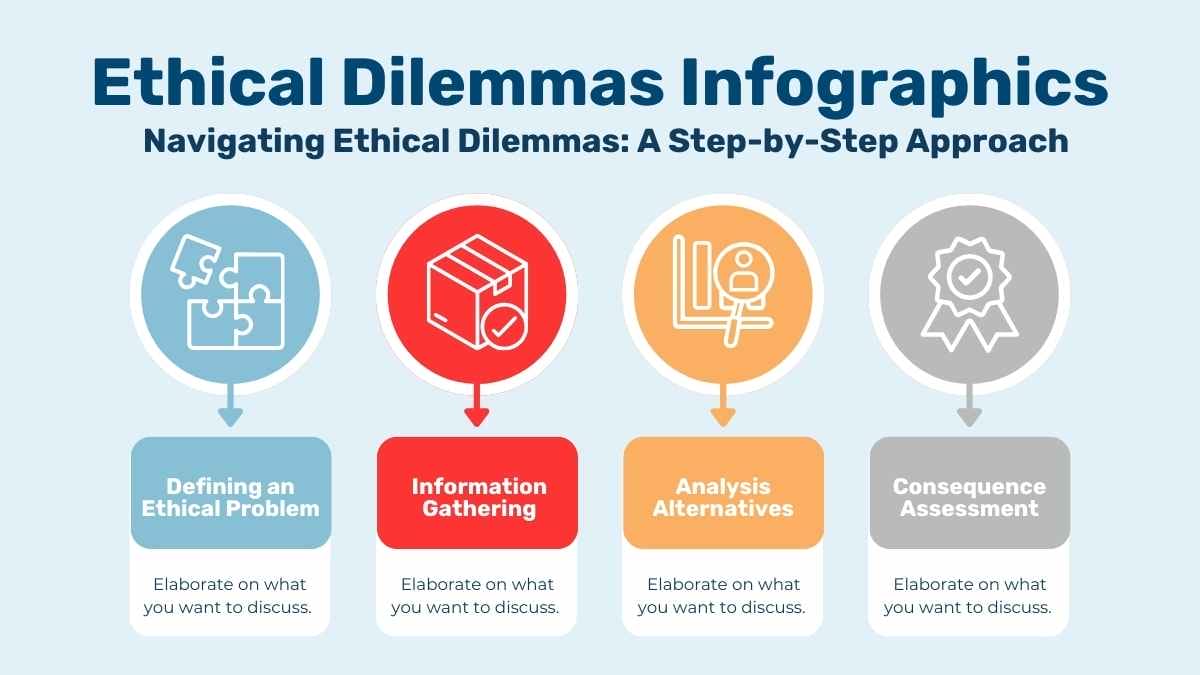
(SlidesCarnival, 2025)


Example: Reflection on Ethical Dilemma

During my attendance at the hospital for cataract surgery, I observed an ethical dilemma involving an elderly patient who initially refused to proceed with the operation despite receiving clear medical advice. The healthcare team respected her autonomy, in line with professional obligations and the Mental Capacity Act (2005). However, her deteriorating vision presented significant risks, including progressive vision loss, increased likelihood of falls, reduced independence, social isolation, and potential medication errors.

Observing this situation, I felt conflicted as the staff balanced the patient’s right to make her own decisions with their duty of care to safeguard her wellbeing. Using Gibbs’ Reflective Cycle (1988), I explored my feelings of frustration, empathy, and concern, and questioned whether the patient was fully informed, whether fear or misunderstanding influenced her decision, and if improved communication could have affected the outcome.

Through critical reflection, I recognised that cultural beliefs, past medical experiences, and the need to build trust were influencing the patient’s decision. The team arranged a family meeting, providing a safe space for her to express her fears. With empathetic support from the professionals and encouragement from her family, the patient ultimately agreed to proceed with the surgery.

This experience highlighted the importance of ethical reflection, empathy, and collaborative problem-solving in health and social care. It demonstrated how patient-centred communication and teamwork can resolve ethical dilemmas while respecting autonomy, promoting safety, and achieving positive outcomes.

The Impact of Misinformation on Health and Social Care Practice

Throughout the last 20 years, social media has become an influential tool in health and social care, providing opportunities for education, communication, and public health promotion. However, there have also been a number of significant ethical dilemmas raised that can affect professionals, service users, and the wider community (Beauchamp, 2019).

Such dilemmas involve the newfound ability of unqualified individuals giving critical medical information and advice online. Influencers or social media users without professional training are able to share personal experiences and opinions that appear credible but are not based on evidence (Tarlier, 2010). This undermines trust in qualified professionals and creates confusion for vulnerable people seeking help (Banks, 2012).

Ethically, professionals must navigate these challenges by promoting truthfulness, integrity, and accountability online. They should engage with social media responsibly using it to educate, raise awareness, and advocate for public health while maintaining professional boundaries and respecting confidentiality (Bradshaw, 2010). Preventing ethical dilemmas related to social media use requires clear professional boundaries, education, and responsible online behaviour (Fawcett, 2012). Health and social care organisations should provide training and guidance on professional use of social media, ensuring staff understand confidentiality laws, data protection, and organisational policies. This helps prevent accidental breaches of patient privacy or the sharing of sensitive information online (Johnstone, 2016).

References:

Banks, S. (2012) Ethics and Values in Social Work. 4th edn. Basingstoke: Palgrave Macmillan.

Beauchamp, T.L. and Childress, J.F. (2019) Principles of Biomedical Ethics. 8th edn. New York: Oxford University Press.

Bradshaw, A. and Stratford, N. (2010) The Reflective Practitioner in Health and Social Care. London: Learning Matters.

Cowley, S., Whittaker, A. and Whittaker, S. (2013) Ethics in Health and Social Care Practice. London: Routledge.

Department of Health and Social Care (2015) Code of Conduct and Professional Standards for Health and Social Care Practitioners. London: DHSC.

Fawcett, J., Desanto-Madeya, S. and Watson, J. (2012) Contemporary Nursing Knowledge: Analysis and Evaluation of Nursing Models and Theories. 3rd edn. Philadelphia, PA: F.A. Davis.

Gibbs, G. (1988) Learning by Doing: A Guide to Teaching and Learning Methods. Oxford: Oxford Polytechnic.
UK Government (2005) Mental Capacity Act 2005. London: The Stationery Office. Available at: https://www.legislation.gov.uk/ukpga/2005/9/contents (Accessed: 13 November 2025).

Johnstone, M.J. (2016) Bioethics: A Nursing Perspective. 6th edn. Chatswood, NSW: Elsevier.

SlidesCarnival (2025) Simple Ethical Dilemmas Infographics [online image]. Available at: https://www.slidescarnival.com/wp-content/uploads/Simple-Ethical-Dilemmas-Infographics-9.jpg (Accessed: 14 November 2025).

Tarlier, D.S. (2010) ‘Ethical reasoning in nursing practice: A reflection on patient autonomy’, Nursing Ethics, 17(4), pp. 419–431.


Melanie Jones - reflective entry - 2nd Blog:

 Melanie Jones -  Reflective Entry - 2nd Blog:

The Value and Application of Critical Thinking in Practice

What is Critical Thinking?

Critical thinking is essential in health and social care practice, as it enables professionals to thoroughly analyse situations and consider all potential approaches to supporting individuals. This process ensures that care is delivered in a structured and goal-oriented manner, aligning with principles such as being specific, measurable, achievable, relevant, and time-bound (SMART) (Cottrell, 2017). Central to critical thinking is the delivery of care that is safe, effective, and consistently person-centred, placing emphasis on practitioners seeking the best outcomes for their service users (Higgs et al., 2008).

Critical thinking requires professional curiosity, encouraging practitioners not to accept information at face value but to question, reflect, and reason in order to determine the most appropriate course of action. This is particularly important within multi-disciplinary teams, where collaborative decision-making can lead to better outcomes for service users (Facione, 2015).


The benefits of critical thinking in health and social care are extensive. It enhances decision-making and allows us as practitioners to anticipate potential consequences and weigh the positive and negative implications of their choices (Cottrell, 2017). Critical thinking supports problem-solving, facilitates adaptability, and promotes consistent improvements in care provision. Ultimately, critical thinking empowers professionals to deliver high-quality, responsive, and evidence-informed care that meets the complex needs of those they support (Facione, 2015).


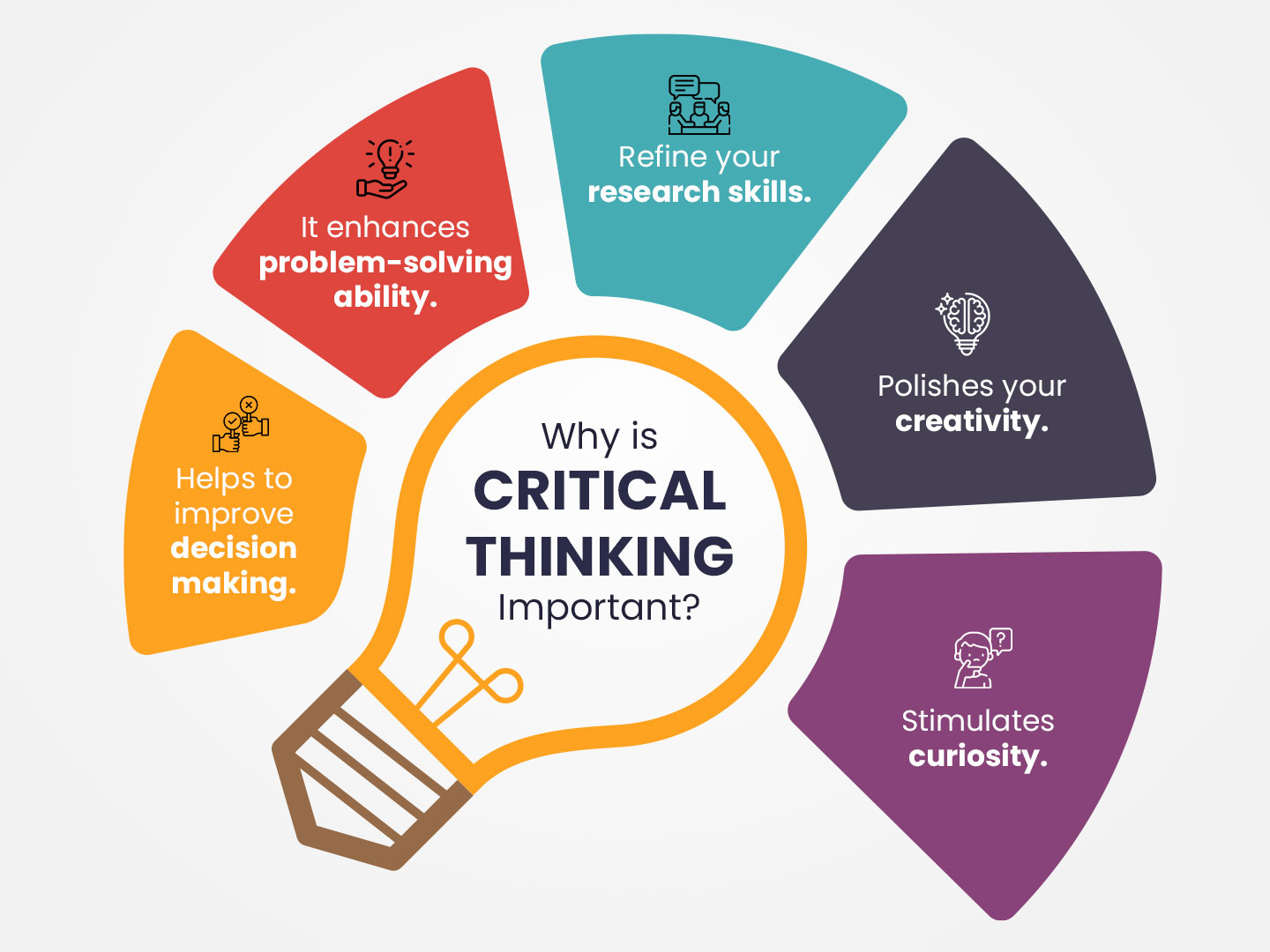
(VTJ, 2023)


How is Critical Thinking Applied in Practice?

Understanding the importance of critical thinking is essential, but it is equally important to recognise how practitioners apply it effectively in health and social care. Various models can support this process, such as Gibbs’ Reflective Cycle (Gibbs, 1988) and the Paul-Elder Critical Thinking Framework (Elder, 2014).

In practice, critical thinking requires practitioners to analyse and assess all relevant information, drawing on sources such as observations, records, and professional knowledge (Brookfield, 2012). They must then engage in decision-making and problem-solving tailored to the individual, carefully weighing potential benefits and risks before determining a course of action. Reflection on personal and professional experiences further enhances practice by enabling practitioners to evaluate past interventions and outcomes, supporting continuous improvement (Mann, Gordon and MacLeod, 2009). Ethical reasoning is also integral, ensuring that core principles such as autonomy, non-maleficence, and justice guide decisions.

Through critical thinking, practitioners are better equipped to collaborate and communicate effectively with multidisciplinary teams and partner agencies. This ensures that care is delivered in a timely, safe, and person-centred manner, optimising outcomes for service users (Manley, McCormack and Wilson, 2008).

Example: A work-Related Dilemma which Required Critical Thinking

This reflection examines my experience of being diagnosed with cataracts and requiring surgery in both eyes, which presented a range of emotional, physical, and practical challenges. Critical thinking was essential in enabling me to analyse the situation thoroughly, evaluate the decisions made, and derive both personal and professional learning from the experience (Facione, 2015). It was applied through reflective analysis, consideration of emotional and systemic factors, ethical reasoning, and the formulation of actionable strategies to inform future social care practice. By engaging critically with the experience, I was able to translate personal insight into professional growth, enhancing my empathy, communication, and ability to deliver person-centred care. The application of critical thinking also allowed me to reframe the situation, reflect on my own thoughts and feelings, and assess the options available, weighing their potential benefits and risks (Brookfield, 2012). This process ultimately enabled me to make informed decisions regarding my care while reinforcing the skills necessary to strengthen and improve my professional practice in the future (Cottrell, 2017).

Conclusion and Professional Development

Through structured reflection and critical analysis, I have gained a deeper understanding of the role of critical thinking in health and social care practice. It underpins ethical decision-making, promotes empathy, enhances communication, and strengthens professional judgement (Higgs et al., 2008). By applying critical thinking to both personal and observed experiences, practitioners can improve the quality of care, respond effectively to complex situations, and continuously develop their professional competence. Moving forward, I plan to engage in regular reflective practice, seek feedback from colleagues, and pursue training to enhance emotional resilience and critical reasoning skills, ensuring I provide safe, effective, and person-centred care in all aspects of my professional role (Bulman and Schutz, 2013).

References:

Brookfield, S.D. (2012) Teaching for Critical Thinking: Tools and Techniques to Help Students Question Their Assumptions. 2nd edn. San Francisco: Jossey-Bass.

Bulman, C. and Schutz, S. (2013) Reflective Practice in Nursing. 5th edn. Oxford: Wiley-Blackwell.

Cottrell, S. (2017) Critical Thinking Skills: Developing Effective Analysis and Argument. 3rd edn. London: Palgrave.

Facione, P.A. (2015) Critical Thinking: What It Is and Why It Counts. 2nd edn. Millbrae, CA: Insight Assessment.

Gibbs, G. (1988) Learning by Doing: A Guide to Teaching and Learning Methods. Oxford: Oxford Polytechnic.

Higgs, J., Jones, M., Loftus, S. and Christensen, N. (2008) Clinical Reasoning in the Health Professions. 3rd edn. Oxford: Elsevier.

Manley, K., McCormack, B. and Wilson, V. (2008) International Practice Development in Nursing and Healthcare. Oxford: Blackwell.

Mann, K., Gordon, J. and MacLeod, A. (2009) ‘Reflection and reflective practice in health professions education: a systematic review’, Advances in Health Sciences Education, 14(4), pp. 595–621.

Paul, R. and Elder, L. (2014) The Miniature Guide to Critical Thinking Concepts and Tools. 7th edn. Tomales, CA: Foundation for Critical Thinking.

Vietnam Teaching Jobs (2023) How to Teach Critical Thinking [image]. Available at: https://vietnamteachingjobs.com/wp-content/uploads/2023/08/how-to-teach-critical-thinking-1.jpg (Accessed: 13November2025).

Wednesday, 12 November 2025

Applying Critical Thinking to Mental Health Dilemmas. (2nd Blog )


Applying Critical Thinking to Mental Health Dilemmas.

(Blog Entry 2) Omozee. 

2.1 From Reflection to Critical Thinking

Part 1 demonstrated my reflection on an incident, which is a significant initial step. But the critical thinking as I would have been taught in this module challenges us to take it a lot further. Reflection may sometimes merely be on my feelings and my actions. Instead, critical thinking is concerned with doubting the whole situation, the assumptions and structures that brought about the situation in the first place. According to the Foundation of Critical Thinking (2019), it is the act of analysing and evaluating thinking as a way of enhancing it. It is a more vigorous and demanding process. One of the authors in this field, Stephen Brookfield (2012) says that the most significant aspect of critical thinking is hunting assumptions. This implies that we need to actively seek the latent beliefs and values that inform our practice and the practice of our surrounding. It is not merely about what happened, but asking the question why things are the way they are.

2.2 Critical Analysis of a Workplace Dilemma

I am now able to re-analyse the incident with Mr. A, not in itself, as a one-off event, but as a dilemma that recurs time and time again: the issue of routine versus person-centred care. Applying the concept of Brookfield (2012), I can go in search of the assumptions that were present.

I assumed that a quiet ward is a safe ward. The assumption made by my senior colleague was that a service user, who feels heard, is a safe service user. But bigger, organisational assumptions were involved as well. The award was overstaffed and it creates an unspoken rule that tasks need to be finished in a short time. This culture of work, which Frohman and Lupton (2020) could refer to as task-oriented, is in direct opposition to the principles of person-centred care.

This is where my thinking will have to consider the critical. I would have to wonder whether the problem was Mr. A. The system that caused A to have to get agitated so that he could be heard. Other authors such as Aveyard, Greenway and Parsons (2023) believe that evidence-based practice is more than the application of clinical evidence, but also the challenge of whether our practice is correct or not. I had been acting under an unspoken principle, that agitation should be restrained, and the actual experience of the matter is that distress should be comprehended. My critical analysis demonstrates me that it is not the question of how we can stop patients getting agitated but how we can reform our system so that patients do not have to get agitated. This is a far more difficult question.

2.3 Deconstructing the Dilemma

Going even further, I may examine the language spoken on the ward. I referred to the actions of my colleague as de-escalation, even this is a problematic term. It presupposes that the individual is escalated, and he or she should be brought down as though he or she is dangerous. What would happen were we to view it as helping a person in distress? Our reality is created in the language we speak. The other concept that I am now able to question is that of resilience. Fisher and Jones (2025) discuss the burden of bouncing back and how the concept of resilience is commonly imposed on both nurses and service users. It puts staff in a stressful situation (such as understaffed ward) and then hopes that staff members are resilient enough to handle them, and that service users are resilient enough to tolerate bad care without making complaints.

This is one of the critical insights to me. The dilemma is not only concerning my personal deeds or Mr. The emotions of A; it is a system as a whole, which depends on people simply coping until they crack. Part 1 reflected on my personal response, which is good but this critical thinking in Part 2 challenged the whole context of the problem. It demonstrates that in order to become a really considerate practitioner, I will not only have to correct my actions, but I will have to be conscious of, and be able to challenge, the imperfect systems I am operating in.


Foundations of Reflective Practice in Mental Health.( Blog Entry1) Omozee


Foundations of Reflective Practice in Mental Health

1.1 Defining Professional Reflection 

Blog Entry1) Omozee.

First, in order to embark on this journey, `I needed to know what professional reflection is. It is far beyond reminiscing of the day. According to Jasper (2013), it is one of the main professional skills, an organised approach to viewing our practice in order to be able to learn through it and improve. It is not a passive process but an active and disciplined process. Maintaining our competence and practise safely for our patients is our responsibility.  Bulman, Lathlean, and Gobbi (2012) found that students and teachers use reflection to learn new things and grasp tough situations.  In mental health, where things are complicated, it's important to relate our feelings and information.  Writing things down like we did in our blog is a strong way to do this.  Reflective journaling helps students bridge the gap between classroom theory and chaotic placement practice, according to Epp (2012).  It avoids theory as words and helps us observe how it works with a service user.

1.2 Selecting a Reflective Framework

A formal model is required in order to prevent reflection as a haphazard set of thoughts. Such models provide our minds with a coherent structure. To travel to my destination, I have decided to apply the Experiential Learning Cycle developed by Kolb (2015). Although other models such as the framework of critical reflection used by Fook and Gardner (2013) do a great job of breaking down social and power problems, the model by Kolb is highly effective in transforming one experience into future action. It consists of four distinct phases, which I have summarised in the table below. This cycle demonstrates that we cannot simply experience something and we have to see how we contribute to it, reflect on its meaning and make plans to behave differently in the future.

Kolb's Learning Styles & Experiential Learning Cycle

Figure 1 Kolb's Reflective Cycle (Kolb, 2014)

Kolb's (2015) Four-Stage Cycle

What it means in practice

1. Concrete Experience

What actually happened? (The event)

2. Reflective Observation

What did I feel and notice? (My reaction)

3. Abstract Conceptualisation

What can I learn from this? (The theory)

4. Active Experimentation

What will I do differently next time? (The plan)

1.3 Reflective Application: An Incident in Mental Health Practice

I will now use the cycle to an incident I had experienced as suggested by Kolb (2015).

(1. Concrete Experience) The situation occurred on a busy ward. A service user, 'Mr. A', got agitated with regards to his medication and felt neglected. He began pacing and his voice increased in volume. I was the first to respond. I attempted to reason with him by saying to him to lower his voice and that it would be sorted soon. This made him more agitated. Then one of the senior colleagues intervened. She sat near him (distantly) and simply requested him to tell her about his frustration. She heard and the situation diffused.

(2. Reflective Observation) I watched this and was ashamed of how I was contributing to the situation. My general supposition was that Mr. The issue was that A was agitated, and it had to be prevented in the interest of the ward. My colleague appeared to interpret the agitation as an effect of the problem: Mr. The helplessness of A. I was concentrated on the concept of control, whereas she was concentrated on the concept of understanding. I realised that my priority was the routine of the ward whereas his was his health.

(3. Abstract Conceptualisation) Reflecting on this, I can imagine how my actions were counterproductive. I was more of a give-orders person, rather than an empathetic one. This relates to person-centred care, which I had heard about, but had not put into practice. I had treated Mr. Not as a person with an authentic anxiety, but as an interruption. The moral of the story here is that de-escalation is not about telling commands, it is about justifying emotions. My colleague gave Mr. Listening gave him a feeling of control, which enabled him to regain his own sense of control.

(4. Active Experimentation) I would now approach my future practice in a totally different way. The next time I will stop briefly to deal with my own defence mechanism. I will then listen, not talk. Active listening skills, such as summarising his concerns (So, you feel ignored...), will be used to demonstrate to him that I have heard him. I will attempt to take my seat, when safe, to demonstrate that I am no danger. I will not only aim at stopping the noise but to discover what is the cause of the distress.


Tuesday, 11 November 2025

John Mental Health post-Holiday (Blog Entry 3:Critical Reflection on Solving HSC Dilemmas)Jose


Blog Entry 3:Critical Reflection on Solving HSC Dilemmas.

Jose Pereira (Group 4)

TitleJohn Mental Health post-Holiday 

Introduction  

John becomes mentally unhealthy after he comes back home from his vacation. The causes of such post-holiday downturns can include unmet expectations, the inability to maintain regular routines, fear of returning to normal life and environmental/social factors. Health and social care practitioners are in a dilemma on whether to fulfil the needs of John, his autonomy, or the demands of family or services when there are multiple types of support that could be suitable.

Understanding the Dilemma

The following are some of the dilemmas that are usually faced by practitioners

To stimulate John to resume daily activities sooner, or give him time to adapt. What to do about John to allow some autonomy, and at the same time some duty of care, should his decisions appear to be impeding the recovery.How to deal with conflicts with colleagues or family members regarding the most appropriate support to give John.

 Critical Reflection offers an organised manner of addressing the ethical, practical, and interpersonal facets of these dilemmas, enhancing the decision-making and care outcomes.  Putting Critical Reflection into Practice. 

 One of the most popular methods of critical Reflection is Gibbs Reflective Cycle, which includes description, feeling, evaluation, analysis, conclusion, and action plan Doe, J. (2025).

This can be applied to the case of John and may go as follows:

  • Description:On coming back from holiday, John complains of anxiety and a low mood. Members of the family are in fear that he is backsliding. 
  • Feelings: The practitioner is confused - whether to push John to participate or to leave him to his own speed? They will also be under the pressure of the expectations of John's support network. 
  • Assessment: Short-term intervention may stabilise John, but failure to deal with underlying causes may lead to recurrent cycles. 
  • Analysis: The practitioner considers the effects of that disruption of routine, expectations, potential guilt, and economic strain, as well as John's individual coping strategies. They will take multidisciplinary contributions from a psychologist, a social worker, or an occupational therapist.
  • Conclusion: No one can be right or wrong, and as important as risk management is, it is necessary to respect the voice of John and make him a part of the planning.
  • Action plan: Practitioner gets to organise a review of John's care plan, discuss with him graded exposure to routines, and make sure that he is included in all consultations and decisions.  

The strategy will avoid snap judgments and concentrate on custom-made solutions to be based on facts and mutual discussion.  

Ethical and Practice issues

Ethical principles, including autonomy, benefits (to be able to act in the best interests of John), and justice (treating him fairly), are emphasised in critical Reflection and can be in conflict with each other when it comes to care planning. As an example, the prioritisation of safety can be contradictory to the wishes and independence of John. The practitioners need to recognise their own biases and be aware of the power dynamics so that the decisions can be clear and justifiable. 

Developing and Enhancing Practice

 Considering practice-based dilemmas assists the practitioners

-Learn the influence of their personal values and past experiences on decision-making. 

-Can tell when systems or communication failures are causing poor results, e.g. by not including John in important meetings. Test ideas through supervision and peer support, and use continuous improvement and learning to promote continuous improvement and learning.

 Conclusion 

Dilemmas in mental health practice are unavoidable but can potentially be used as a source of development, enhanced knowledge, and more complex care. Critical Reflection provides the room to see the entire picture, which encompasses the opinion of John, and to incorporate ethics, evidence and compassion in the decision-making process. This self-reflection will not make such a process less challenging, but will enhance the professional support, and the mental health care provided to John after his holiday will be beneficial and person-centred.


Ethical Issues for Online Health & Social Care Bloggers

Ethical Issues for Online Health & Social Care Bloggers   Blog Entry 4: Omozee Ugiagbe (Group 4) Introduction Professional communication...